A straighter smile can improve confidence, but many adults and teens hesitate at the thought of wearing traditional braces. Invisalign and other clear-aligner systems offer a less noticeable, removable alternative for certain orthodontic concerns.
If you are researching Invisalign in St. Petersburg, FL, it helps to understand more than how the trays look. Your dental and gum health, the type of tooth movement needed, and your ability to follow the treatment plan can all influence whether clear aligners are appropriate.
This article provides general educational information and is not a diagnosis or personalized treatment recommendation. A dentist or orthodontist should examine your teeth, bite, and gums before recommending clear aligners or another form of orthodontic care.
What Is Invisalign, and How Does It Work?
Invisalign is a brand of clear aligner therapy. Although people sometimes use “Invisalign” as a general term, not every clear-aligner product is part of the Invisalign system.
Clear aligners are custom-made trays designed to guide teeth through a planned sequence of movements. A patient wears each set according to the clinician’s instructions and then moves to the next set in the series. The trays are generally removed for eating, drinking beverages other than water, brushing, and flossing.
Treatment planning often begins with digital scans or dental impressions, photographs, and X-rays when clinically appropriate. The provider studies the position of the teeth, the bite, and the supporting tissues before designing a plan. Small tooth-colored attachments, elastics, or other techniques may be recommended when additional control is needed.
Clear aligners can be useful in selected cases, but they are not automatically the best option for every tooth movement. A systematic review of Invisalign treatment found that predictability can vary based on the movement being attempted and noted limitations in the available evidence. This is one reason an in-person assessment matters.
Who May Be a Candidate for Clear Aligners?
A clinician may consider clear aligners for concerns such as mild to moderate crowding, spaces between teeth, or certain bite irregularities. Candidacy depends on the individual case rather than the appearance of the smile alone.
Clear aligners also require daily cooperation. Because the trays are removable, patients must wear them consistently, keep track of them, and follow instructions about changing sets. Someone who frequently leaves the trays out may experience slower or less predictable progress.
Traditional braces or another approach may be recommended when the case requires movements that are difficult to accomplish with removable trays. In some situations, a provider may discuss a combined plan. The right choice is the one that safely addresses the patient’s specific needs—not simply the option that is least visible.
Age is not the only consideration
Many adults assume that orthodontic treatment is only for teenagers. In reality, age alone does not determine candidacy. Adults may explore clear aligners as long as their oral condition supports the proposed treatment.
Teenagers may also qualify, but they need to be responsible enough to wear and care for the trays. For younger patients whose teeth and jaws are still developing, the provider must consider growth as part of treatment planning.
Why Gum Health Matters Before Invisalign
Teeth do not stand alone. Their roots are supported by bone and surrounded by gum tissue, so an orthodontic consultation should consider the foundation of the smile as well as tooth alignment.
Bleeding, tenderness, gum recession, loose teeth, or a history of periodontal disease should be discussed before treatment begins. These signs do not establish a diagnosis by themselves, but they may prompt a more detailed periodontal evaluation. Existing dental problems may need attention before active tooth movement is considered.
Patients with a history of gum disease may require coordinated care between an orthodontic provider, general dentist, and periodontist. Regular monitoring allows the care team to respond to changes in the gums and supporting structures during treatment.
At Crawford Implant Dentistry & Laser Periodontics, the clinical focus includes periodontal and dental implant care in St. Petersburg. For someone considering clear aligners who also has gum concerns, a periodontal assessment may help clarify whether the supporting tissues need care or monitoring before orthodontic treatment proceeds.
What to Expect From the Clear-Aligner Process
1. Consultation and examination
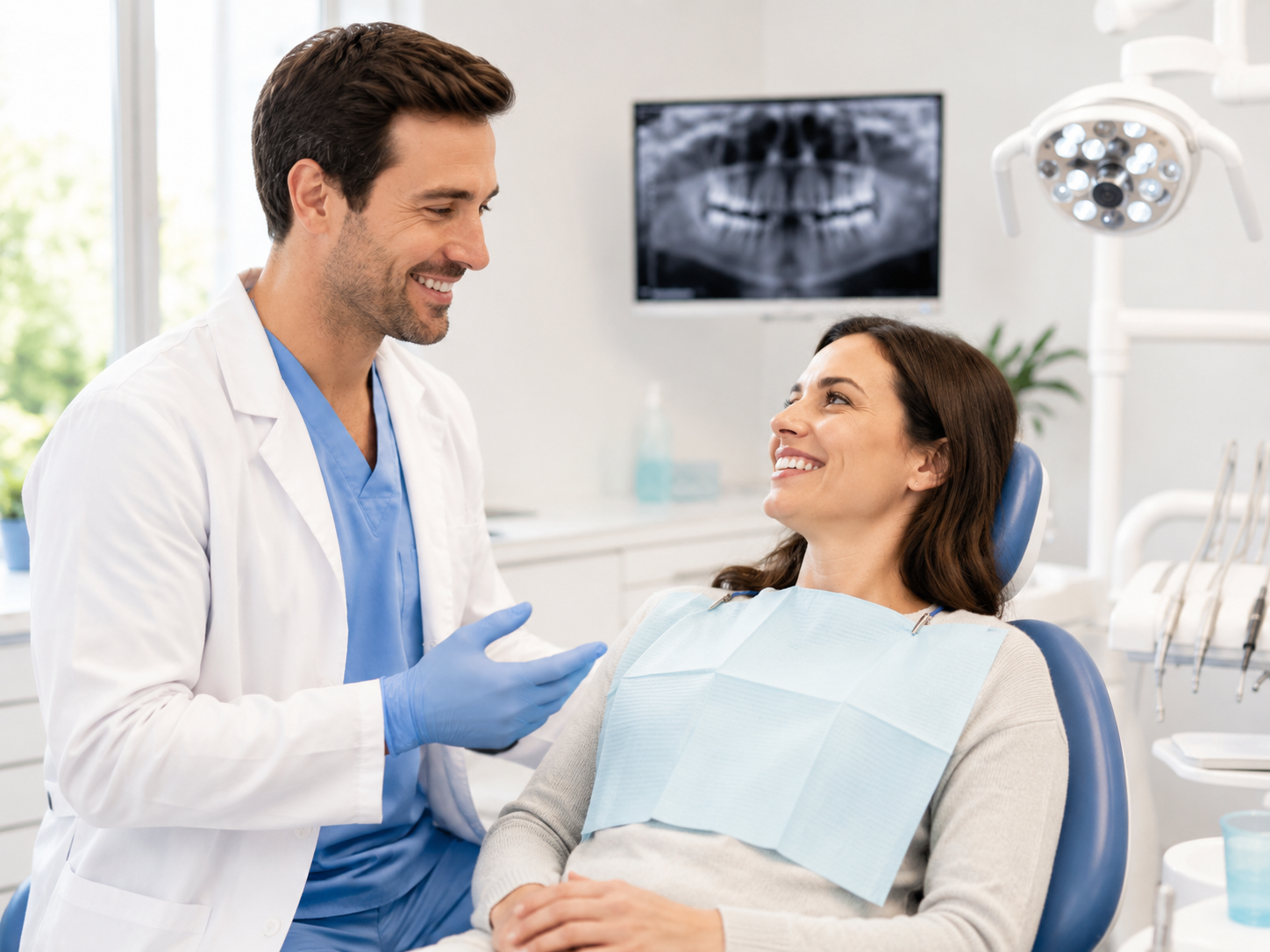
The first visit generally includes a conversation about the patient’s goals and concerns. The provider evaluates the teeth and bite, reviews oral health history, and decides which records are needed. This is also the time to mention jaw discomfort, previous orthodontic treatment, dental implants, crowns, missing teeth, or periodontal treatment.
2. Personalized treatment planning
If clear aligners appear appropriate, the provider develops a plan based on the examination and digital records. A computer simulation may help explain the intended movements, but it should be viewed as a planning tool rather than a guaranteed preview of the final result.
The provider should explain whether attachments, elastics, reshaping between selected teeth, or other procedures may be part of the plan. Patients should also ask whether refinements—additional trays created after the initial series—are included in the quoted fee.
3. Active treatment and checkups
During treatment, the patient wears the aligners according to instructions and attends progress visits. These appointments allow the provider to assess fit, tooth movement, bite changes, and oral health. If the teeth do not track as planned, the clinician may revise the approach.
Some pressure or temporary tenderness may occur after changing to a new set of trays. Persistent pain, a damaged tray, significant gum irritation, or an aligner that no longer fits should be reported rather than ignored.
4. Retention after treatment
Finishing the last active aligner does not mean the teeth will remain in place without support. A retainer is commonly recommended after orthodontic treatment. The systematic review cited above also identified limited long-term evidence regarding retention and stability, reinforcing the importance of following the provider’s personalized retention plan.
Living With Invisalign or Other Clear Aligners
Clear aligners can fit into a busy St. Petersburg lifestyle, but they still require a routine. Practical habits include:
- Removing the trays before meals and most beverages
- Brushing before reinserting them when possible
- Cleaning the trays as directed without exposing them to damaging heat
- Keeping them in a protective case when they are out of the mouth
- Maintaining regular dental cleanings and examinations
- Bringing the current aligners to scheduled progress appointments
Removability makes brushing and flossing more straightforward than it may be around fixed brackets and wires. However, repeatedly placing trays over teeth that have not been cleaned can trap food debris and sugars. Good daily hygiene remains essential.
It is also wise to keep the aligner case nearby. Wrapping trays in a napkin at a restaurant or setting them loose in a bag makes them easier to lose or damage—a common inconvenience that can interrupt the treatment sequence.
How Much Does Invisalign Cost in St. Petersburg, FL?
There is no single fee that applies to every Invisalign case. Cost may depend on the complexity of the tooth movement, the anticipated length and scope of care, the number of aligners, required records, refinements, and whether retainers are included.
Dental insurance may provide an orthodontic benefit, but coverage varies by plan and may include age limits, waiting periods, or lifetime maximums. Patients should request a written estimate and confirm benefits directly with their insurer.
When comparing quotes, it helps to ask what the total includes rather than focusing only on the advertised starting price. Diagnostic records, office visits, replacement trays, refinement aligners, and retainers may or may not be part of the initial fee.
Choosing a Clear-Aligner Provider in St. Petersburg
A trustworthy consultation should feel educational rather than rushed. Patients can ask:
- Who will diagnose, plan, and monitor the treatment?
- Is Invisalign suitable for this specific bite and tooth position?
- Are there dental or periodontal concerns to address first?
- What alternatives should be considered?
- How often will progress be evaluated in person?
- What happens if the teeth do not move as planned?
- Are refinements and retainers included in the fee?
- How will care be coordinated with the general dentist or periodontist?
Patients with gum recession, previous periodontal treatment, missing teeth, or dental implants should make those concerns part of the conversation. Dental implants do not move like natural teeth, so their location may affect orthodontic planning.
Frequently Asked Questions
Is Invisalign painful?
Patients may notice pressure or temporary tenderness, particularly after beginning a new aligner. The experience varies. Severe, worsening, or persistent pain should be discussed with the treating clinician.
Can a patient eat while wearing clear aligners?
Aligners are generally removed for meals and snacks unless the provider gives different instructions. Patients should also ask which beverages are appropriate while the trays are in place.
Can Invisalign treat every orthodontic problem?
No. Clear aligners can address many selected concerns, but certain complex movements or bite problems may respond more predictably to fixed appliances or a combined approach. An examination is necessary to compare options.
What happens if an aligner is lost?
The patient should contact the treating office instead of guessing which tray to wear. Depending on the situation, the provider may advise using a previous set, moving forward, or ordering a replacement.
Can someone with gum disease get Invisalign?
A history of periodontal disease does not answer the question by itself. The current condition of the gums and supporting bone must be evaluated. Some patients may need periodontal care or coordinated monitoring before and during orthodontic treatment.
Does Crawford Implant Dentistry provide Invisalign?
Crawford Implant Dentistry & Laser Periodontics primarily describes its services as periodontal and implant care. Because service availability can change, patients should contact the practice directly to ask whether clear-aligner treatment is available or whether a periodontal evaluation and coordination with an orthodontic provider would be appropriate.
Build a Straighter Smile on a Healthy Foundation
Invisalign can be an appealing option for patients who want a removable and discreet approach to orthodontic treatment. Successful planning, however, involves more than ordering trays. The provider must consider the bite, the movements required, daily patient cooperation, and the health of the tissues supporting the teeth.
If gum health is part of the concern, the experienced team at Crawford Implant Dentistry & Laser Periodontics can answer questions about periodontal evaluation and coordinated dental care. The practice is located at 5601 1st Avenue S, St. Petersburg, FL 33703. Contact the office to discuss the most appropriate next step for a healthier, more confident smile.